Upcoming Earth Signals Concert
Earth Signals: Wisconsin Weather will be on April 20, 2026 at 7:30 pm CT in Collins Recital Hall, Hamel Music Center. Earth Signals: Wisconsin Weather is the second in our series of science-inspired musical experiences: come learn about Wisconsin's weather including winter storms, cold fronts, heavy rain, and perfect sunny days, and hear them expressed in sound and music. A new work for String Quintet with Live Electronics by Christopher Cobley, DMA student in Music Composition, will be debuted. In addition, weather data from the new Wisconsin Environmental Mesonet (Wisconet) will be transformed into sound and presented by Molly McKellar, a senior in Atmospheric and Oceanic Sciences. Alongside the performances, attendees will learn about the science behind the weather and why new observational platforms like the Wisconet matter for Wisconsin. Free and open to the public.
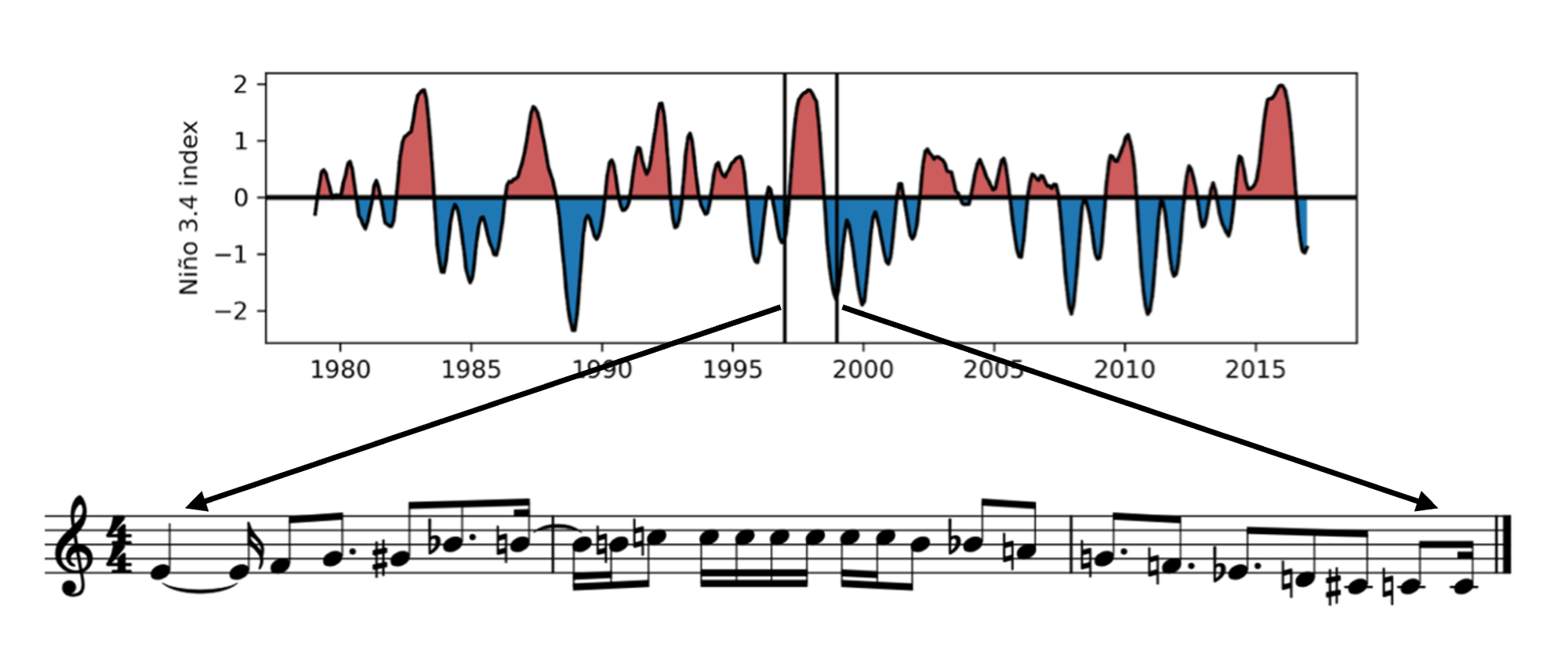
Earth Signals is a science communication project from the UW-Madison Oceans and Climate Group. In collaboration with faculty and students in the Mead Witter School of Music, we will explore oceanographic, climate, and weather science concepts using music and sonification.
The Earth Signals project is led by Elizabeth Maroon, Assistant Professor of Atmospheric and Oceanic Sciences, whose NSF CAREER Award, "Signals from the Deep" supports cross-campus education and public outreach. In collaboration with Johannes Wallmann, Professor of Music, and student from the Mead Witter School of Music, Earth Signals brings ocean, climate, and wather science to life through music.
Past Earth Signals Concerts
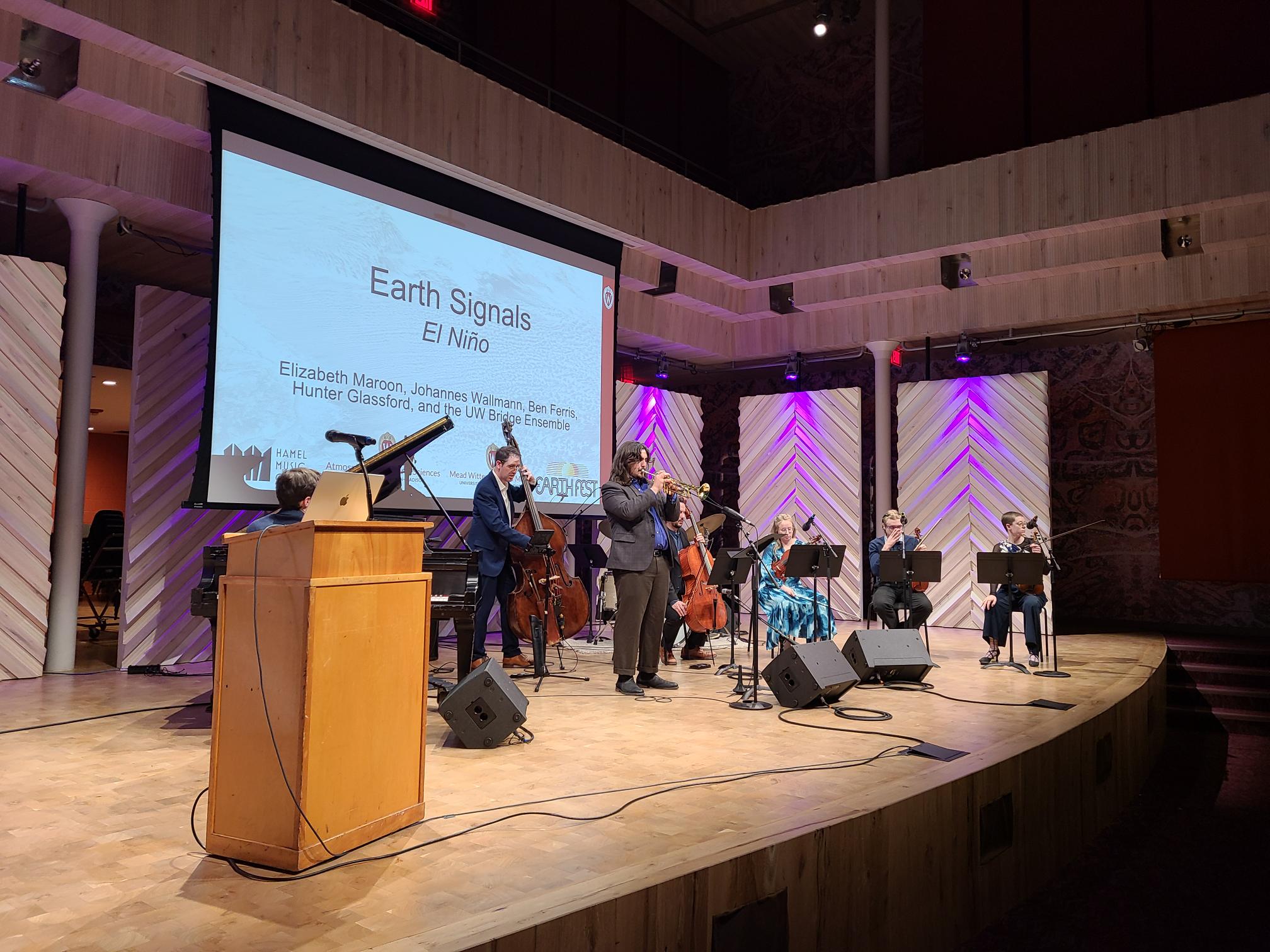
Earth Signals: El Niño — a science-inspired musical experience — took place on April 21, 2025, at 7:30 pm CT in Collins Recital Hall, Hamel Music Center. For this inaugural concert, the UW Bridge Ensemble, an eight-person group blending jazz and classical music, performed the new composition "Earth Signals" by Ben Ferris, PhD candidate in the Mead Witter School of Music, inspired by El Niño forecasts. El Niño data was also converted directly from numbers into sound, a process known as sonification, presented by Hunter Glassford, a Class of 2025 Atmospheric and Oceanic Sciences major. Alongside the performances, attendees learned about the science behind El Niño and ensemble climate prediction and gained perspective on how this climate pattern can affect weather worldwide. Free and open to the public.